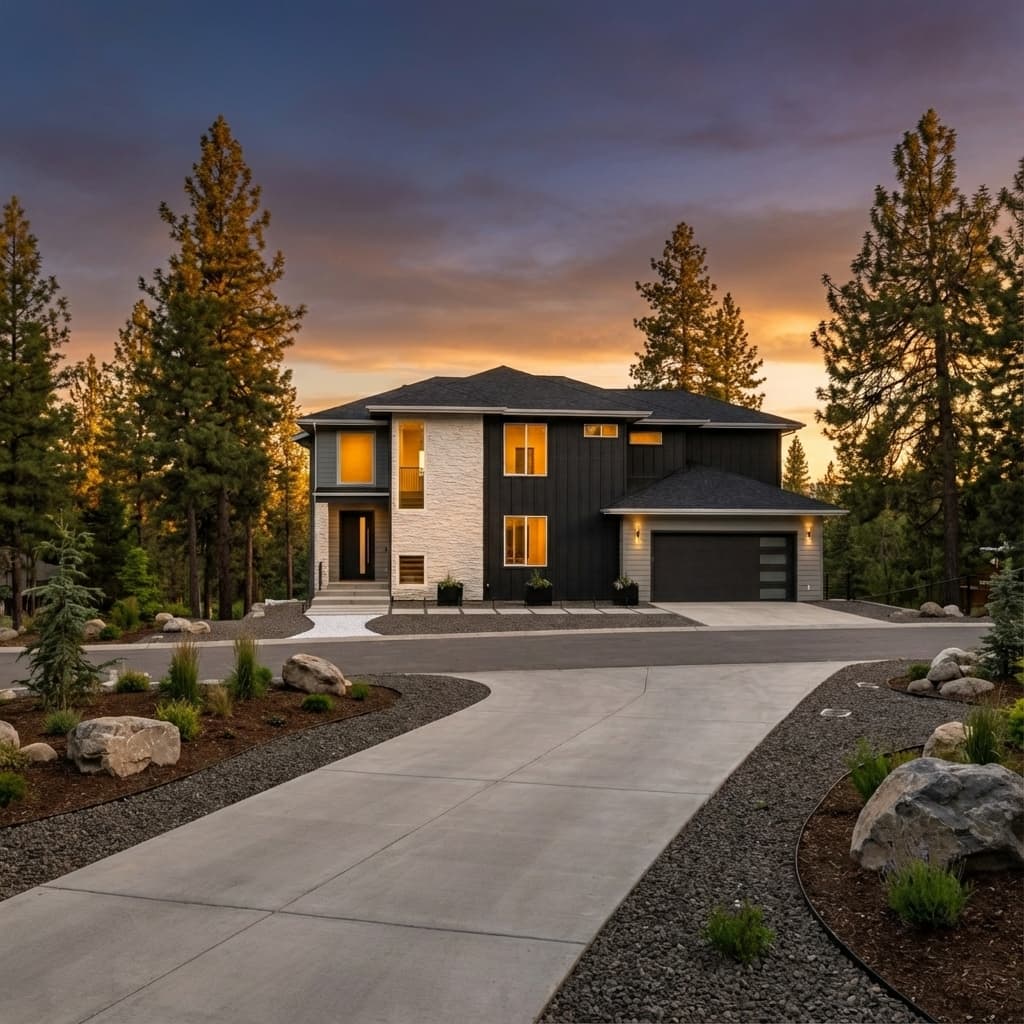
The parcel that looks like a bargain is often the one that costs the most. Water, septic, power, access, zoning, and soil — the six things to verify before your earnest money goes hard.
We have watched more than one family fall in love with a view, close on the parcel, and then discover that getting water, power and a septic system to that view will cost more than they paid for the land.
Land in Spokane County is genuinely good value compared to most of the West. But raw acreage prices tell you almost nothing about what it costs to build there. Here is the due diligence list we walk clients through — ideally before the earnest money goes non-refundable.
1. Water
The first question on any rural parcel. There are three possibilities and they are very different.
Public water at the street. Best case. Confirm the purveyor, the connection fee, and whether capacity is actually available — a main in the road does not guarantee they will sell you a hookup.
Existing well. Ask for the well log (Washington Department of Ecology maintains well records), a recent flow test, and a current water quality test. What you want to know: depth, static level, gallons per minute, and whether nitrates, arsenic or bacteria are present. A well producing 2 gpm is legal but genuinely inconvenient for a family home.
No well. You are drilling. In Spokane County that ranges from roughly $18,000 to $45,000+, and depth varies enormously by area — some parts of the county drill several hundred feet. Talk to a local driller about that area before you buy, and ask about neighbouring well depths.
Also confirm your water right situation. Washington's rules around permit-exempt wells have been contested and legislated repeatedly; in some watersheds a new domestic well carries conditions, mitigation requirements, or limits on outdoor use. Verify current requirements for your specific parcel and watershed with the county and Ecology. Do not assume.
2. Septic
If there is no sewer, you need an on-site septic system approved by the Spokane Regional Health District.
The controlling factor is soil. A percolation test and soil log determines whether a conventional gravity drainfield works, or whether you need a pressure distribution system, a sand filter, or a mound — which can triple the cost.
- Conventional gravity system: $18,000–$30,000
- Pressure distribution: $28,000–$45,000
- Mound or advanced treatment: $40,000–$70,000+
If the parcel already has an approved septic design on file, that is worth real money and real time. If it does not, make your purchase contingent on a successful soil evaluation. This is the single most common reason a "buildable" lot turns out not to be.
Also verify the reserve area — the health district generally requires space for a replacement drainfield. On small or steep parcels, that requirement alone can dictate where the house sits.
3. Power and utilities
Get a written cost estimate from the utility — Avista, Inland Power, or Vera Water & Power depending on location — before closing.
Extending primary power is priced by distance and terrain. A quarter mile can be $20,000–$40,000+. Overhead is cheaper than underground; rock makes underground much worse.
While you are at it, check natural gas availability (often unavailable rurally, which makes your HVAC decision for you), internet service, and whether there is cell coverage at the building site.
4. Access and easements
- Is there legal, recorded access to a public road? Not a driveway someone has used for thirty years — a recorded easement. Prescriptive access is a lawsuit, not a plan.
- If access is shared, what does the road maintenance agreement say? Who plows? Many lenders require one.
- Will the county approve a driveway approach where you need it? Sight distance requirements are real, and on curved rural roads they occasionally rule out the obvious location.
- What is the driveway going to cost? Long, steep, or rocky driveways run $25,000–$80,000+ — and remember it needs to carry a concrete truck and a fire apparatus.
5. Zoning, setbacks, and what you are allowed to build
Pull the parcel's zoning from Spokane County and confirm:
- Minimum lot size and whether the parcel is a legal lot of record
- Setbacks from front, side, rear, and any critical areas
- Height limits and maximum lot coverage
- Whether accessory dwelling units or shops are permitted, and at what size
- Whether the parcel is inside the Urban Growth Area — this affects density, utilities, and future development rights
Then check for critical areas: wetlands, steep slopes, geologically hazardous areas, aquifer recharge zones, floodplain, and fish and wildlife habitat. Any of these can require studies, buffers, or mitigation, and any of them can shrink the buildable envelope dramatically.
Also check for CC&Rs on subdivision lots. Private covenants can be far more restrictive than county code — architectural review, minimum square footage, material restrictions, and build-by deadlines.
6. Soil, rock, and topography
Parts of Spokane County have basalt close to the surface. Rock excavation is expensive and it is discovered, not predicted, unless you look.
- Walk the site with your builder or an excavator. Visible rock outcrops nearby are a signal.
- Consider a test pit on parcels where a basement is planned. A few hundred dollars to avoid a $40,000 surprise.
- Assess the slope realistically. Gentle slopes are often ideal — daylight basements, good drainage. Steep slopes mean retaining walls, engineered foundations, and long driveways.
- Look at drainage. Where does water go in a wet March? Standing water in spring tells you more than a dry August walkthrough.
7. The things people forget
- Wildfire exposure. Much of the county sits in the wildland-urban interface. This affects building requirements, defensible space obligations, and increasingly insurance availability. Get an insurance quote for the parcel before closing — in fire-prone areas this is now a genuine buying decision. See wildfire-resistant home design.
- Title review. Easements, mineral rights, timber rights, and utility corridors across your building site.
- Property taxes and current use. Land in Open Space, Farm and Agriculture, or Designated Forest Land classification carries reduced taxes — and removing it triggers back taxes plus interest and penalty.
- Survey. If corners are not marked, get it surveyed. Fence lines are frequently not property lines.
- Solar orientation and prevailing wind. Free performance if you plan for it, permanent annoyance if you do not.
A due diligence budget worth spending
For a rural parcel, $3,000 to $8,000 spent before closing is cheap:
- Soil evaluation and perc test: $1,200–$3,000
- Survey: $1,500–$6,000
- Utility cost estimates: usually free, just slow
- Well driller consultation: usually free
- Builder site walk: we do this at no charge
- Title review: part of closing
Make your offer contingent
Structure a feasibility period long enough to actually complete the work — 45 to 60 days is realistic for a rural parcel — with contingencies on:
- Successful soil evaluation and septic feasibility
- Acceptable water availability and cost
- Acceptable utility extension cost
- Confirmation of legal access
- Zoning and critical-area verification
- Insurability
Sellers of good land will accept reasonable contingencies. A seller who will not let you test the soil is telling you about the soil.
Bring your builder before you buy
The cheapest hour you will spend on your project is walking a parcel with someone who has built in this county for decades. We do it for free, we do it without any expectation that you hire us, and we will tell you plainly if a parcel is going to be expensive to build on.
We also help clients find land — sometimes parcels that never make it to a public listing. Get in touch, or see our land services.