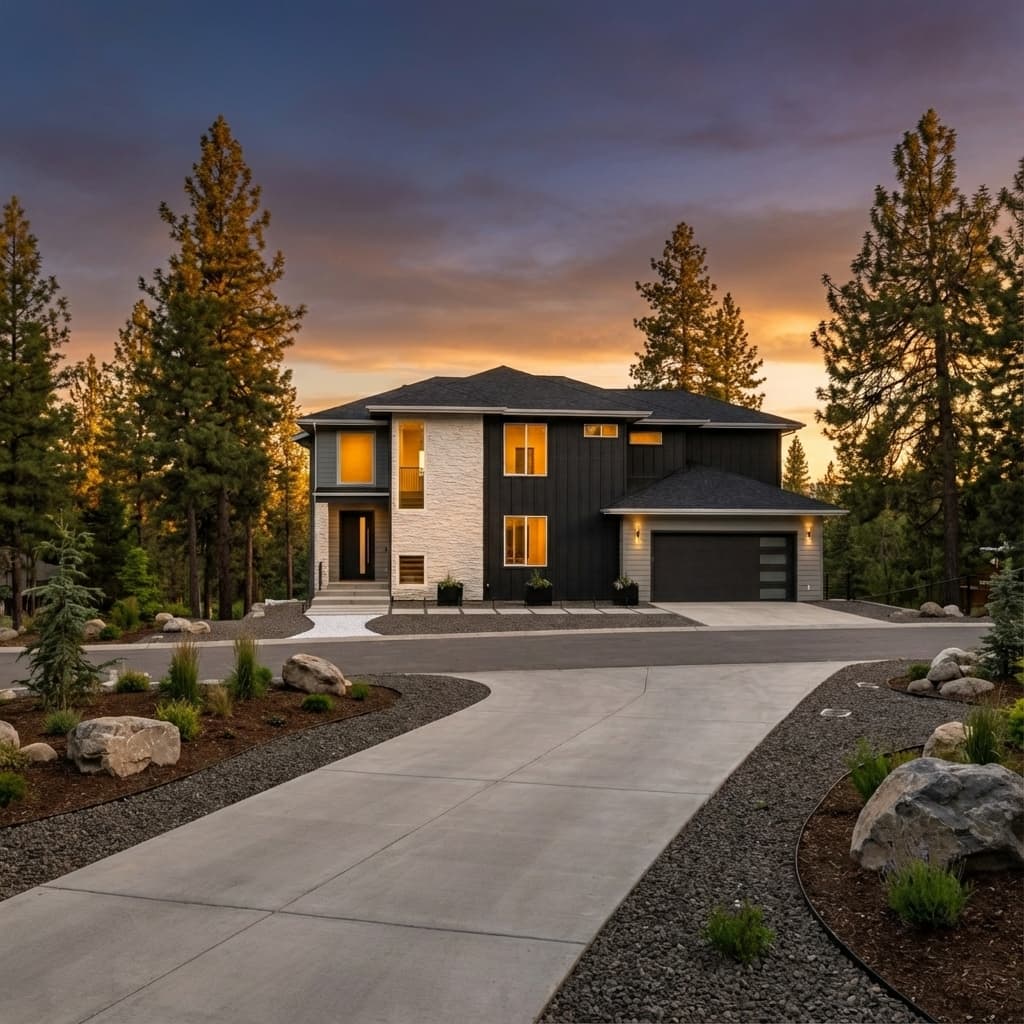
If you lost a home in the Old Trails, Autumn Lane or Fairview fires, here is the order the rebuild actually happens in — from the first insurance call through debris removal, permits, and moving back in.
The first weekend of August 2026 changed a lot of lives in Spokane County. The Spokane Complex — the Old Trails, Autumn Lane and Fairview fires — moved fast enough that many families left with what was in the car. Hundreds of homes are gone. Tens of thousands of people were evacuated.
We have been building homes in this county since 1967. We are not going to pretend a blog post makes any of this easier. But in the weeks after a loss like this, the single most useful thing we can give you is a clear sequence: what happens first, what happens next, and what is safe to leave until later.
Here is the order a rebuild actually runs in.
Step 1: Open the claim before you do anything else
Call your insurance carrier and open a claim as soon as you are safe, even if you have not seen your property yet and even if you do not know the extent of the damage. The claim number is the key that unlocks everything downstream — Additional Living Expense payments for your hotel or rental, debris removal coverage, and eventually the dwelling payout that funds the rebuild.
Two things to start doing on day one:
- Keep a claim log. Date, time, who you spoke to, what they said, and what they promised to send. A plain notebook is fine. This log is worth more than most people expect six months later.
- Save every receipt. Hotels, meals, clothes, pet boarding, a laptop to replace the one that burned. Additional Living Expense coverage reimburses a lot of this, but generally only what you can document.
If you cannot reach your carrier or you are getting nowhere, the Washington State Office of the Insurance Commissioner runs a consumer advocacy line at 800-562-6900. They are free, they are not on your insurer's side, and after a declared disaster they are unusually responsive.
Step 2: Document the property before it is cleared
Once fire officials have released your neighborhood, go back — with an N95 or better, boots, and gloves. Ash from a burned structure is not campfire ash; it contains whatever was in the house.
Photograph and video everything before any cleanup begins:
- Wide shots of the structure from all four sides
- The interior of every room, even if it is only a foundation outline
- Vehicles, outbuildings, fencing, decks, wells, septic lids, and landscaping
- Anything you can still identify — appliances, tools, furniture frames
Your carrier will ask for a contents inventory, and it is the most tedious part of any fire claim. Start it now while your memory of the house is fresh. Walk through the floor plan room by room in your head and write down what was in each closet and cabinet. Old phone photos and video from birthdays and holidays are surprisingly good evidence of what you owned.
Step 3: Understand what your policy will actually pay
Before you can plan a rebuild you need three numbers from your declarations page:
- Coverage A — Dwelling. The limit for rebuilding the structure itself.
- Extended or Guaranteed Replacement Cost. Many policies add 10–50% above Coverage A. In a disaster where hundreds of homes are being rebuilt at once, this matters enormously.
- Ordinance or Law coverage. This is what pays to bring the rebuild up to current code, which is not optional — your 1978 house does not get rebuilt to 1978 standards.
We cover this in far more detail in our guide to getting the full payout on a Washington fire insurance claim, because underinsurance is the number one reason rebuilds stall.
A quick reality check: if your policy was written five or ten years ago and never adjusted, there is a real chance the dwelling limit reflects what your house cost to build then, not what it costs to build now. Find that out in month one, not month eight.
Step 4: Choose your own contractor
Your insurer will very likely hand you a preferred-vendor list. You are not obligated to use it. In Washington, the homeowner chooses the contractor — full stop. Preferred vendors are sometimes excellent and sometimes just the ones who agreed to the carrier's pricing.
What you should insist on, from anyone you talk to:
- A current Washington contractor registration. Verify it yourself at the Department of Labor & Industries "Verify a Contractor" tool — check the bond, the liability insurance, and the complaint history.
- A line-item, Xactimate-compatible estimate. Xactimate is the software nearly every adjuster uses. When your builder's estimate is in the same format and the same line-item structure, the negotiation is about numbers instead of about translation. This alone can save months.
- References from people who rebuilt after a loss, not just people who did a remodel. Insurance rebuilds are a different discipline.
Be careful right now. Large fires attract out-of-area operators who show up with a truck, ask for a deposit, and are gone by October. Do not sign anything on a doorstep, and do not pay a large upfront deposit to a company you cannot find on the L&I registry.
Step 5: Debris removal and site assessment
Nothing gets built until the lot is clear and clean. Depending on how the county and state structure the recovery, there may be a government-sponsored debris removal program that covers most or all of the cost — often in exchange for assigning the debris-removal portion of your insurance benefit. Or you may opt out and hire it privately.
Either path, this stage involves:
- Hazardous material screening (asbestos in older homes, household chemicals, propane tanks, batteries)
- Structural debris and ash removal, usually including several inches of soil
- Assessment of the foundation — a slab or stem wall that has been through a structure fire is frequently not reusable, even when it looks intact
- Well and septic inspection, and utility disconnection and reconnection
Expect this phase to take weeks, not days, and expect it to be sequenced by the county across the whole burn area rather than by who called first.
Step 6: Design, permits, and the rebuild decision
Now comes the fork in the road: rebuild what you had, or build what you actually want?
Many carriers will pay to replace "like kind and quality." That does not mean you must reproduce the original floor plan. If you want a different layout, you can generally apply the dwelling payout toward a new design and fund the difference yourself. Families who spent twenty years wishing the kitchen opened to the back yard often take this chance.
Two practical notes:
- Rebuilding on the existing footprint is usually the fastest permit path, because setbacks, septic siting, and driveway access are already established.
- Changing the footprint, adding square footage, or moving the structure triggers a fuller review — and in the wildland-urban interface, potentially additional fire-hardening requirements.
We walk through the county process in Spokane County building permits after a fire.
Step 7: Build back with the fire in mind
You are going to rebuild in the same landscape that just burned. It would be a waste not to build for it. Class A roofing, ember-resistant vents, non-combustible siding at the lower wall, tempered glazing, enclosed eaves, and a genuinely defensible first five feet around the foundation are not exotic upgrades — most add single-digit percentages to a build and dramatically change ignition odds.
We go deep on the specifics in wildfire-resistant home design for Eastern Washington.
A realistic timeline
Most Spokane-area fire rebuilds run 14 to 24 months from the fire to move-in. Roughly:
- Months 1–3: claim, documentation, contractor selection, debris removal
- Months 3–6: design, engineering, permit submittal and review
- Months 6–8: permit issuance, site work, foundation
- Months 8–16: framing through finishes
- Months 16–20: final inspections, certificate of occupancy, move-in
After a mass-loss event those numbers stretch, because permit offices, framing crews, truss plants, and concrete suppliers are all serving hundreds of households at once. We break the phases down honestly in how long it takes to rebuild a house after a fire.
What to do this week
- Open the claim and get the claim number written down.
- Ask your carrier in writing for your Additional Living Expense limit and duration.
- Request your full policy — the declarations page and the complete policy form.
- Start the contents inventory.
- Register with the county and state recovery resources, and with After the Fire Washington for the current list of local aid.
- Talk to a builder who is actually based here.
We are local, and we are here
Mathis Construction has been building in Spokane and Spokane County for nearly sixty years. We have walked burned lots with families before. If you want someone to look at your property, read your policy limits with you, or put together a line-item rebuild estimate your adjuster can actually work from, that conversation is free and there is no obligation attached to it.
Get in touch with our team whenever you are ready. There is no rush from our side — take care of your family first.